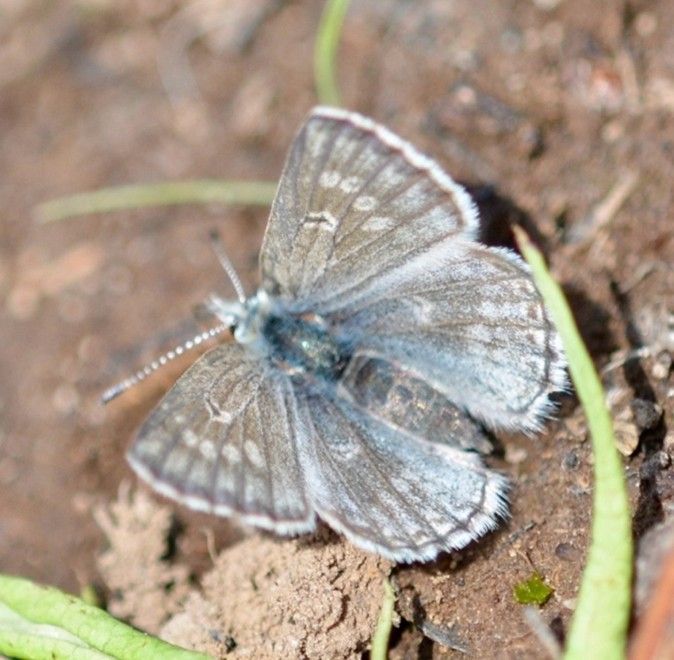
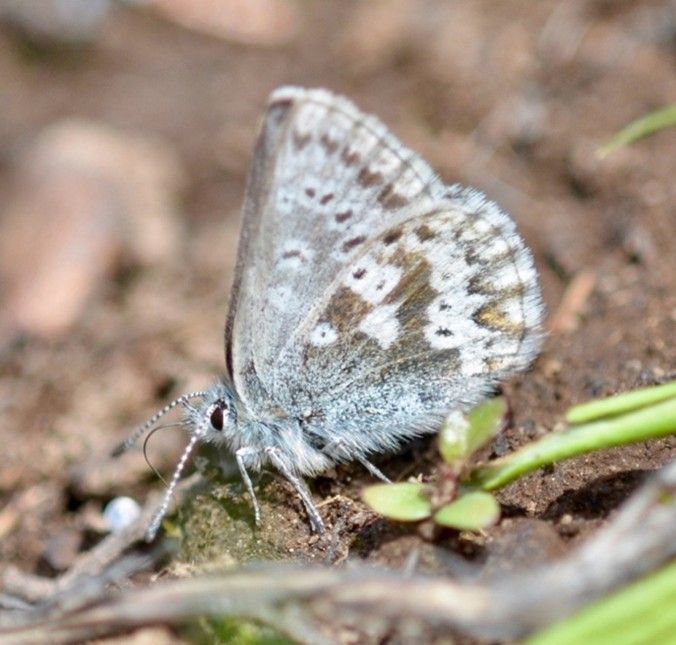
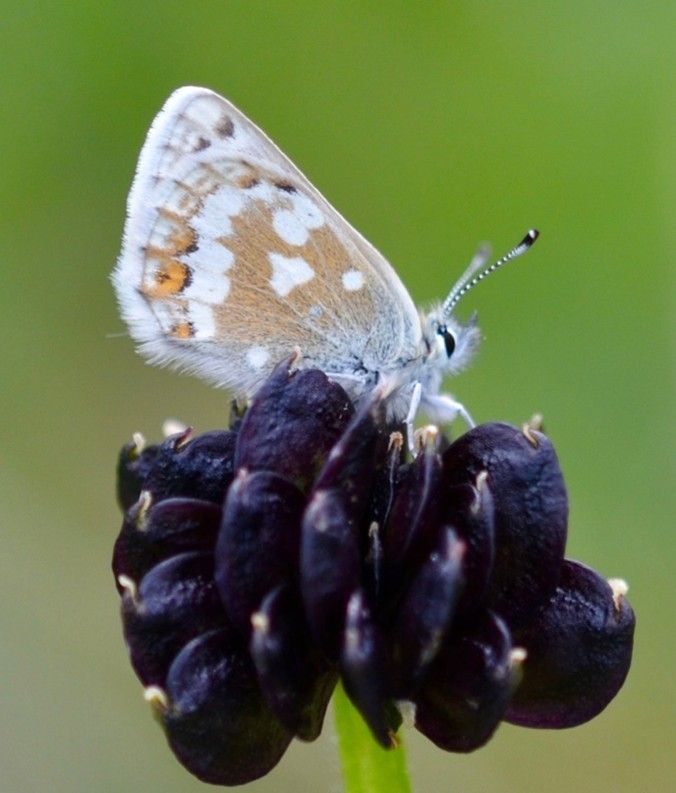
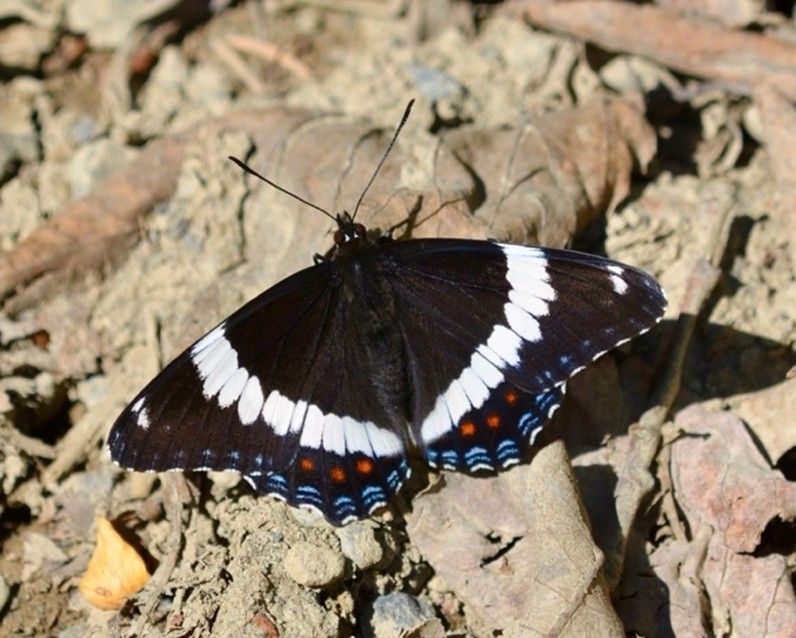
Butterflies of

 Chugach State Park

Butterflies of

Chugach State Park

A Field Guide by Rick Sinnot

Chugach State Park is one of the four largest state parks in the United States. Its 773 square miles support populations of grizzly and black bears, moose, wolves, wolverines, lynx and many other northern species of wildlife. But its butterflies are easier to see, at least during summer, and they never bite.


This field guide is intended to make it easier for you to identify butterflies in Chugach State Park and the Municipality of Anchorage, Alaska’s largest city.


The guide is based on over a decade of my field work. However, invaluable resources include Butterflies of Alaska: A Field Guide and websites maintained by Butterflies and Moths of North America (BAMONA), e-Butterfly, and iNaturalist. The photos are mine or taken by Lisa Sinnott unless indicated otherwise.


Butterfly taxonomy remains in flux. Experts occasionally split or combine species as knowledge accrues, which can result in changes to either scientific or common names. I have used scientific names according to A Catalog of the Butterflies of the United States and Canada by Jonathan Pelham and common names according to the North American Butterfly Association’s Checklist of North American Butterflies, Edition 2.6, with the exception of Arctic White, Yellow-dotted Alpine, Large Heath, Julia Orangetip, and Western Arctic Skipper, based mostly on recent name changes.


Because butterflies have four wings and every description relies on differences in wing colors and patterns, lepidopterists use abbreviations to save space; hence, FW means forewing and HW means hindwing, D means dorsal (i.e., upper surface) and V means ventral (i.e., underneath). Hence, DHW describes the dorsal hindwing.


Other terms that might be unfamiliar are “outer margin,” or “marginal,” which refer to the often definitive markings on the rounded edge of a wing; “submarginal,” which refers to the area slightly inside of the outer margin, “median band,” which refers to a band of a different color that extends from the leading edge across the center of the wing, often used to differentiate between two related species; “bask,” which is a characteristic pose, wings extended and orientated perpendicular to the sun, adopted when a butterfly needs to warm its wing muscles for flight; and “puddle,” which means to land on moist soil or gravel, often in congregations, to siphon up essential dissolved salts.


Size is an important characteristic for identification. Most Alaska butterflies are relatively small. To help make size a little more useful, I’ve arbitrary assigned the species to three size classes: small (less than 31 mm or 1.2 inches), medium (31-49 mm or 1.2-2 inches), and large (greater than 49 mm or 2 inches).


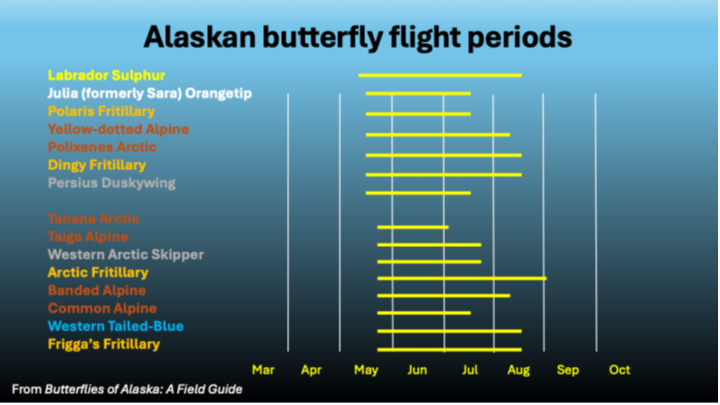
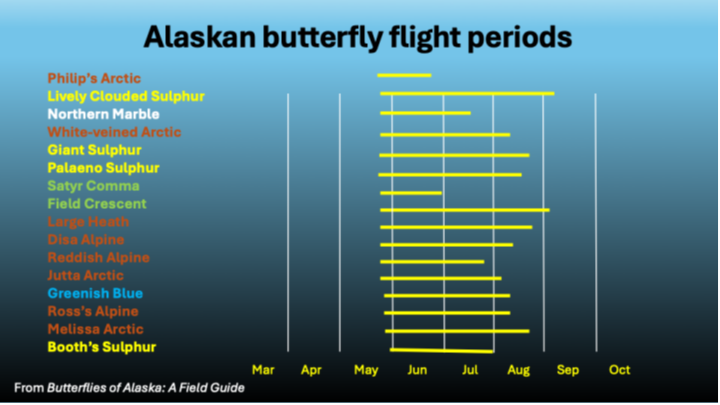
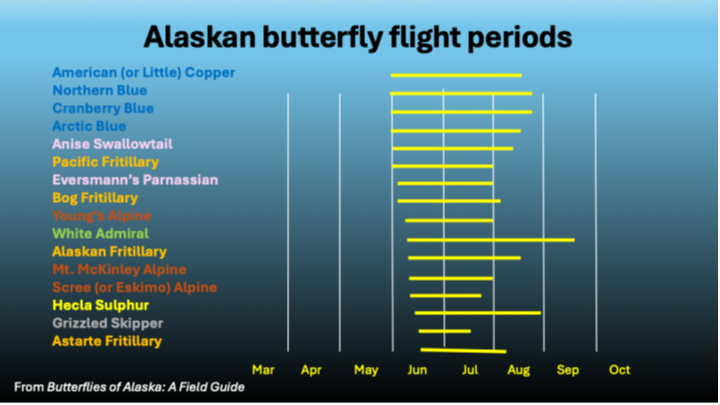
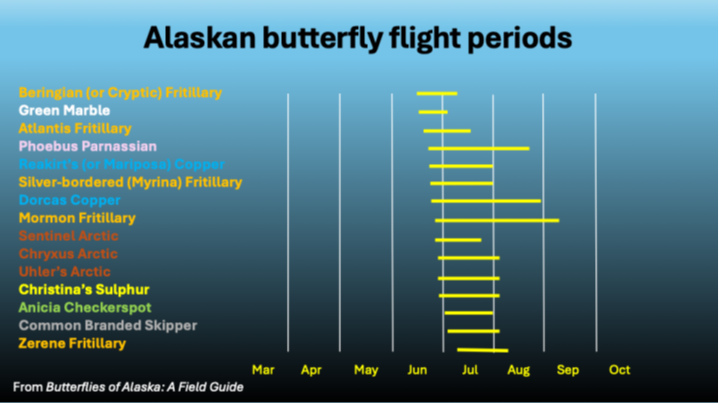
Flight periods can extend much earlier and later in butterfly field guides with a continental scope. I used the flight periods specific to Alaska identified in Butterflies of Alaska: A Field Guide. Also, be aware that butterflies find it difficult to fly at air temperatures under about 55 to 60 degrees Fahrenheit unless it’s a sunny day, so cool and cloudy days are often a bust.


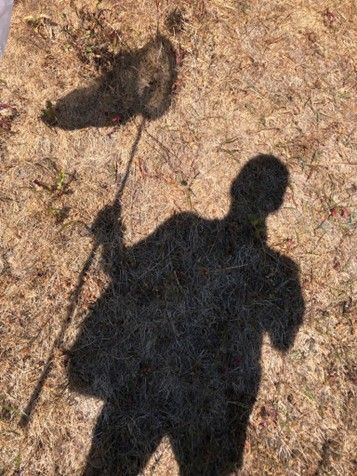
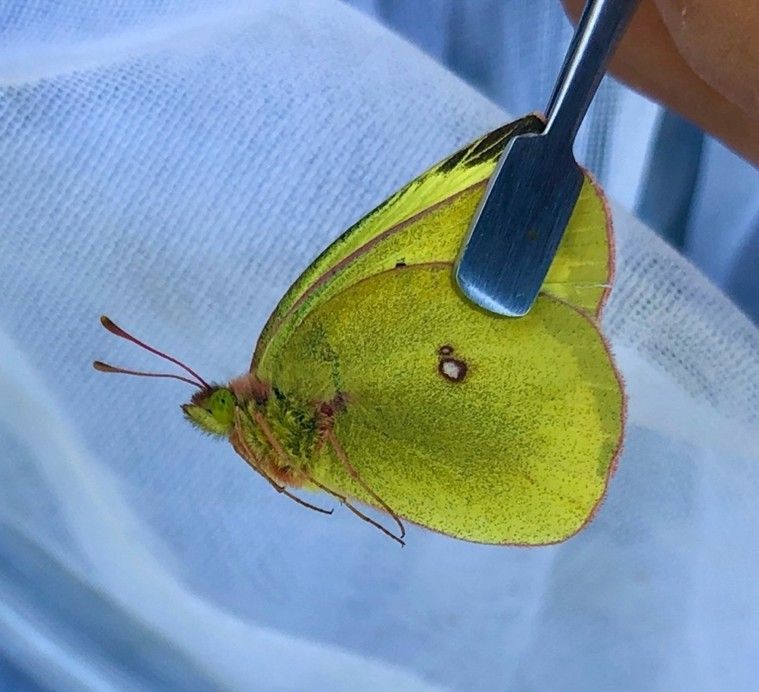
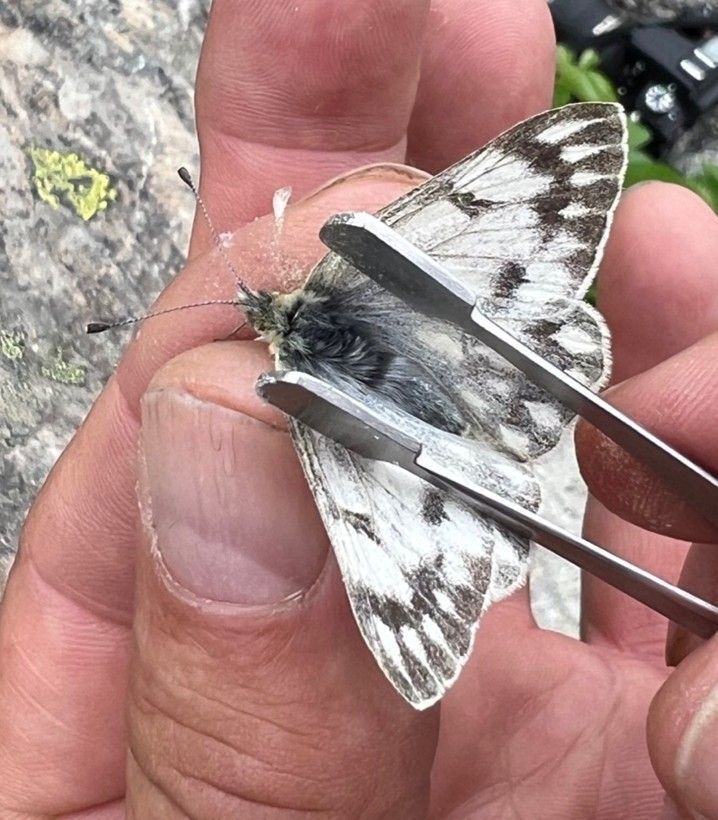
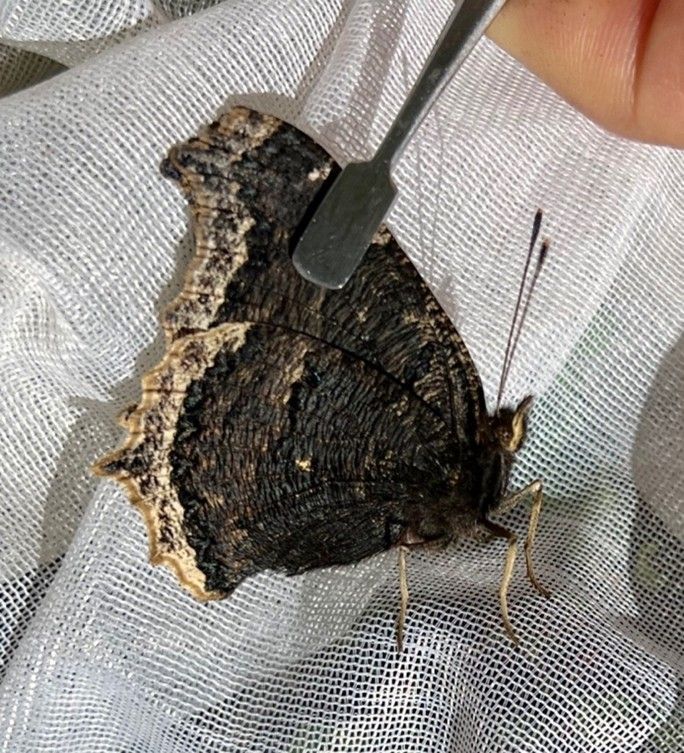
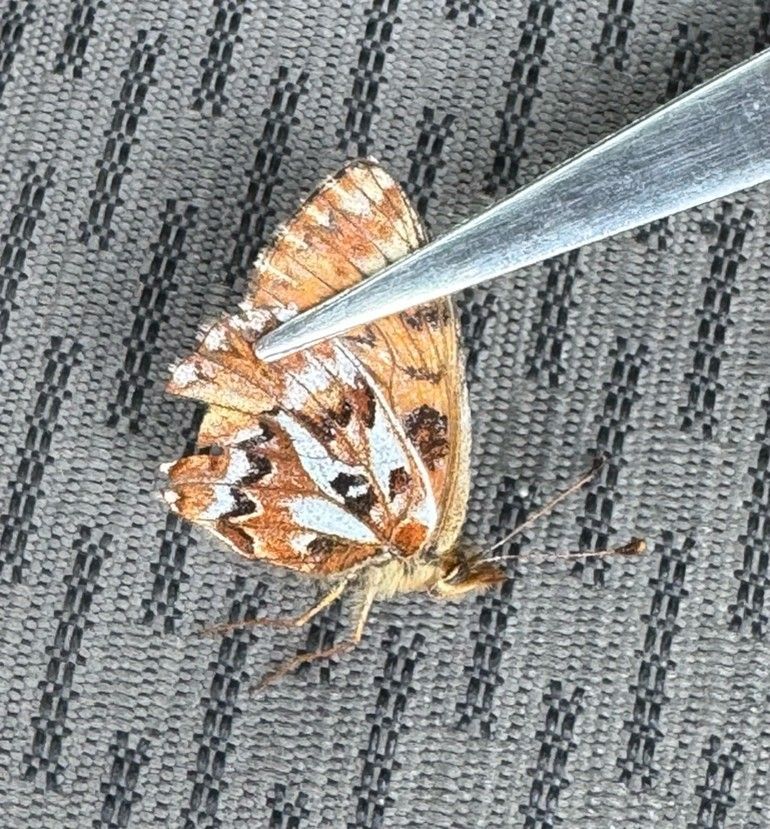
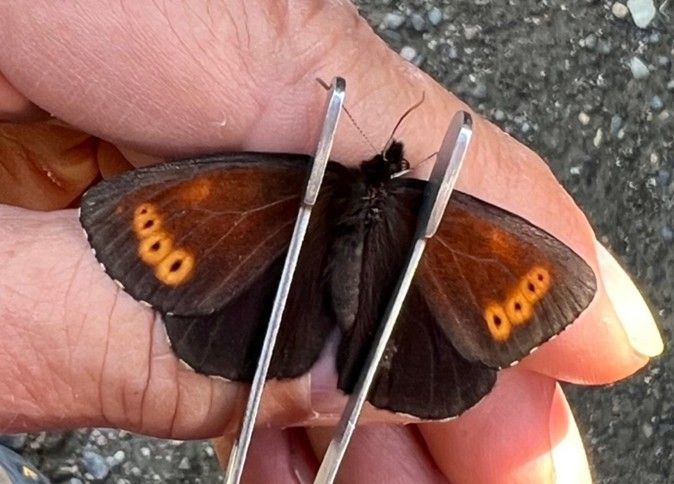
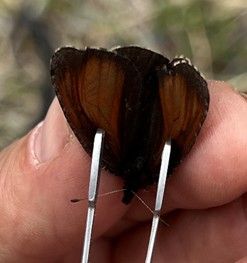
Butterflies will often let you approach closely, but for seeing some of the more subtle field marks nothing beats a pair of close-focusing binoculars. Most butterflies won’t sit still long enough for you to thumb through your field guide, so the best way to identify unfamiliar butterflies is from images taken with a macro telephoto lens; however, today’s cell phone cameras are also quite useful for documenting wing patterns and colors for later perusal. Temporarily detaining a butterfly with a net may also be an option, but be aware that some places don’t allow nets, or you need a permit. Butterflies are fragile, so it’s best to pinch their wings together with a tweezers to avoid squeezing the body or rubbing lots of scales off their wings with your fingers.


Some butterflies are attracted to flowers or sunny patches along trails; also, males patrol linear openings in the boreal forest for females, so butterflying along trails can be rewarding. Many species, however, are limited to more open areas such as fields, alpine tundra and scree slopes. Information provided for each species will help you decide where and when to look and what to expect when you get there. Don’t forget the boggy areas, which may support unique species as well as plenty of mosquitos.


I’ve partitioned the butterflies by family because if you know the characteristics of the five butterfly families found in Alaska, it simplifies identification of species. I’ve used a red font for species that haven’t been found in the Anchorage area yet, but have been observed in southcentral Alaska so they might also be found here.


I hope this field guide will show how easy it is to identify butterflies and enjoy them on another level. If you are visiting Alaska, you may find that your hometown butterflies become much more interesting, and you will be the envy of local butterfly enthusiasts because your checklist will include some truly exotic boreal species.


I thank Laura Kruger, Executive Director of the Eagle River Nature Center, for enthusiastically supporting this field guide and designing its website. I also thank Lisa Sinnott for her years of support in the field and for letting me wander off on my own sometimes when the butterflies call.


I encourage you to submit photos of butterflies with relevant information, such as location and date, to one of the citizen science websites, such as BAMONA, e-Butterfly, or iNaturalist.


“In the end, we will conserve only what we love, we will love only what we understand, we will understand only what we are taught.”

-Baba Dioum, Senegalese conservationist


SKIPPERS

PANASSIANS & SWALLOWTAILS

SULPHURS, WHITES & MARBLES

COPPERS AND BLUES

TYPICAL BRUSHFOOTS

BRUSHFOOTS - FRITTILARIES

BRUSHFOOTS - ALPINES & ARCTICS


 Butterflies of Chugach State ParK and Anchorage area:  A Checklist*

Skippers

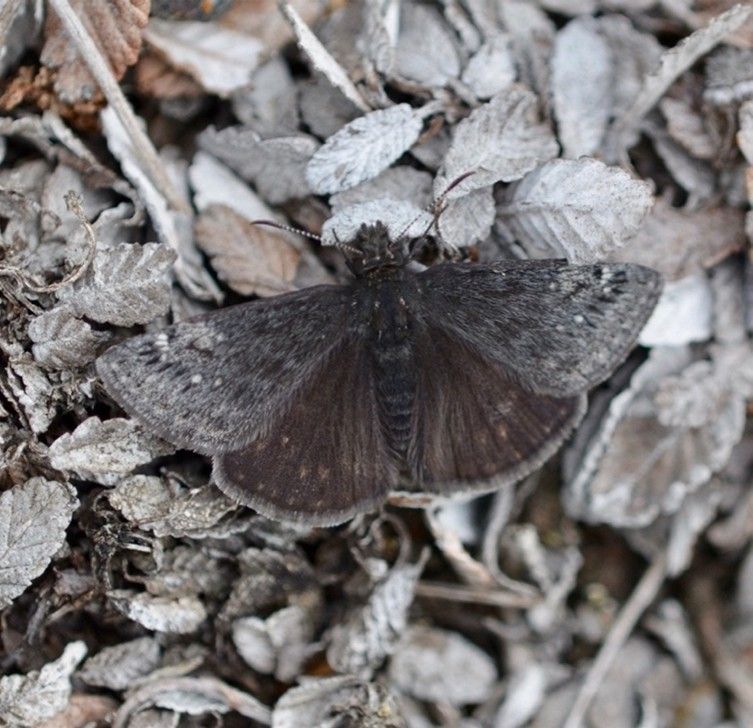
___ Persius Duskywing (Erynnis persius) 

___ Western Arctic Skipper (Carterocephalus skada)

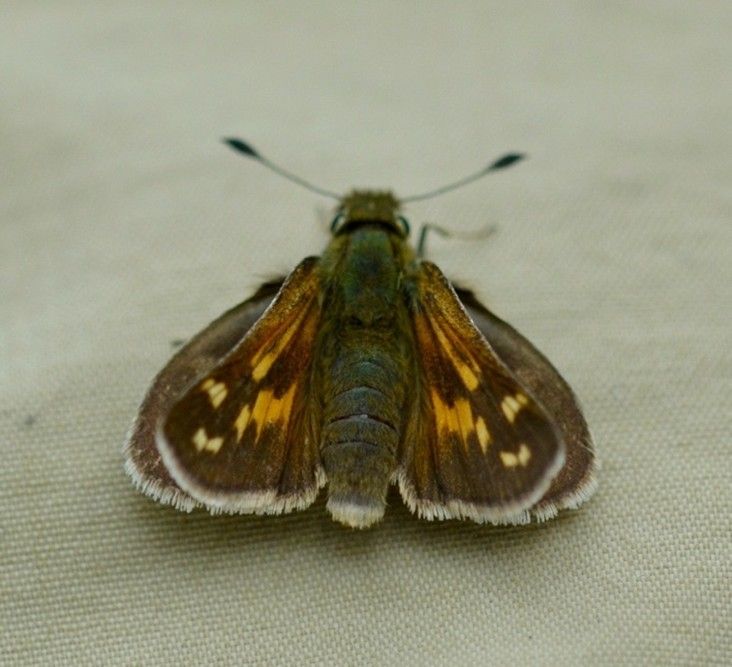
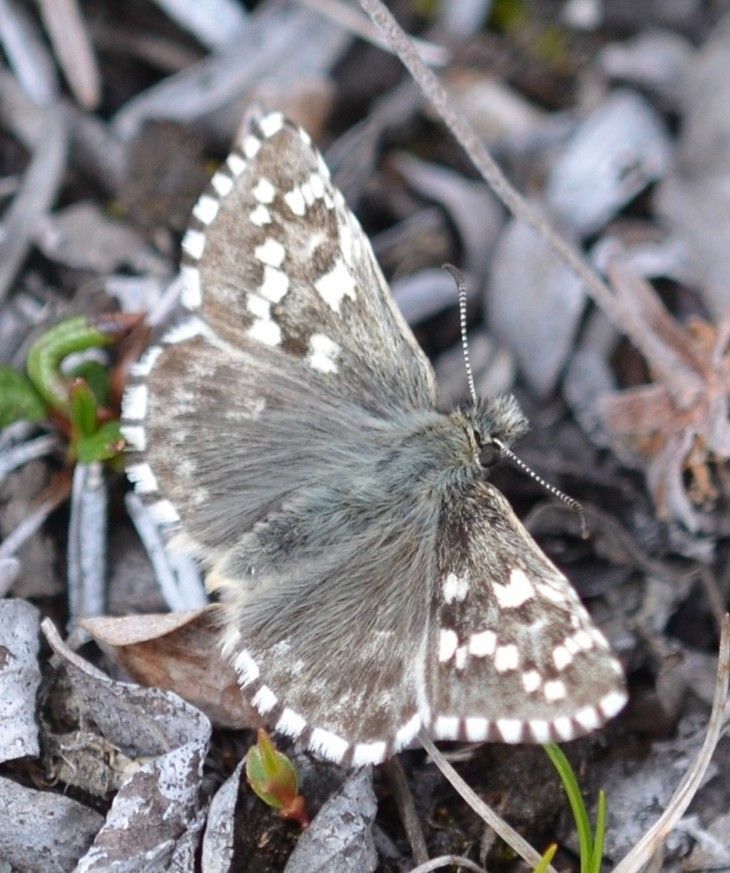
___ Grizzled Skipper (Pyrgus centaureae)

___ Common Branded Skipper (Hesperia comma)


Parnassians & Swallowtails

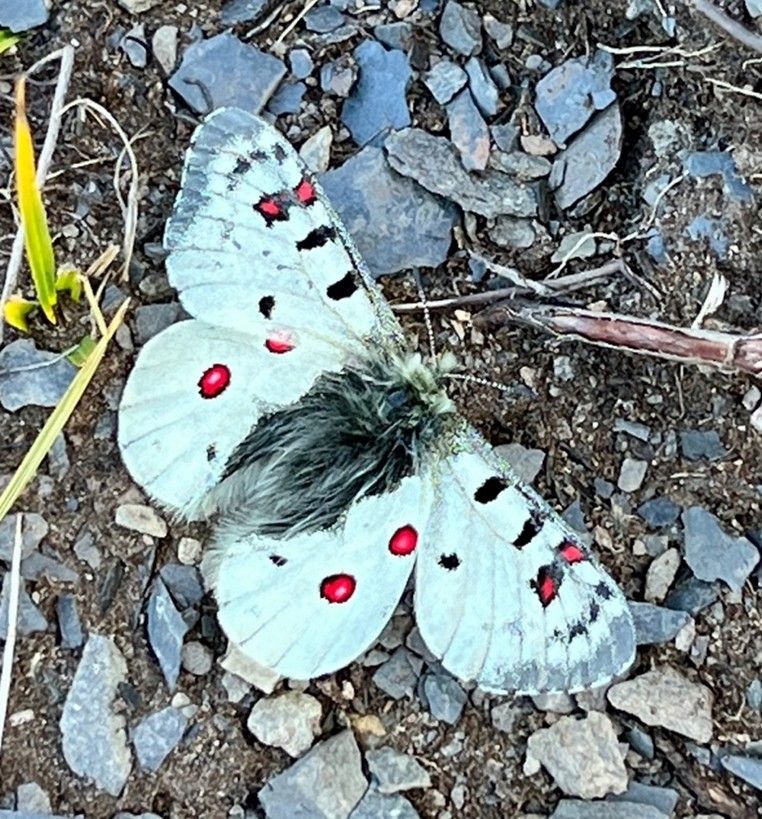
___ Phoebus Parnassian (Parnassius phoebus)

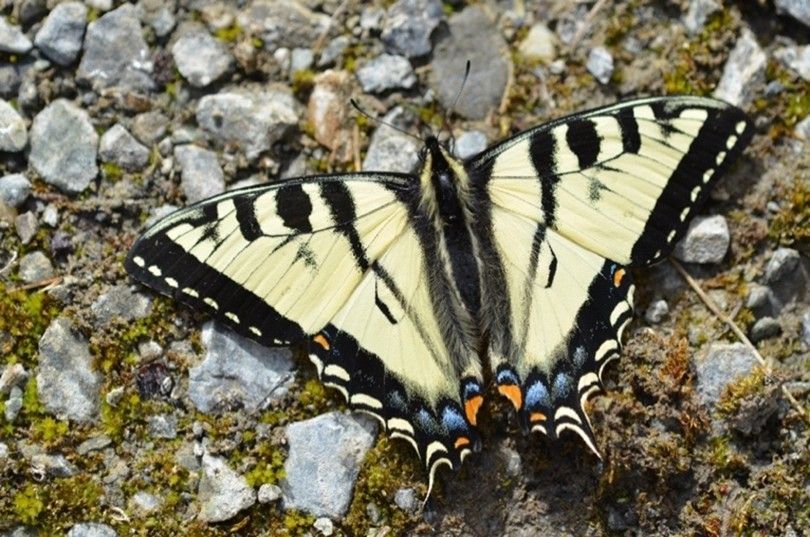
___ Canadian Tiger Swallowtail (Papilio canadensis)

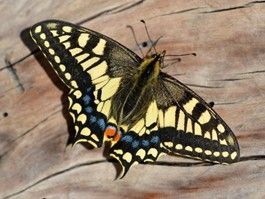
___ Old World Swallowtail (Papilio machaon)


Sulphurs, Whites & Marbles

___ Lively Clouded Sulphur (Colias vitabunda)

___ Giant Sulphur (Colias gigantea)

___ Hecla Sulphur (Colias hecla)

___ Booth’s Sulphur (Colias boothii)

___ Labrador Sulphur (Colias nastes)

___ Palaeno Sulphur (Colias palaeno)

___ Large Marble (Euchloe ausonides)

___ Northern Marble (Euchloe creusa)

___ Western White (Pontia occidentalis)

___ Arctic White (Pieris angelika)


Coppers & Blues

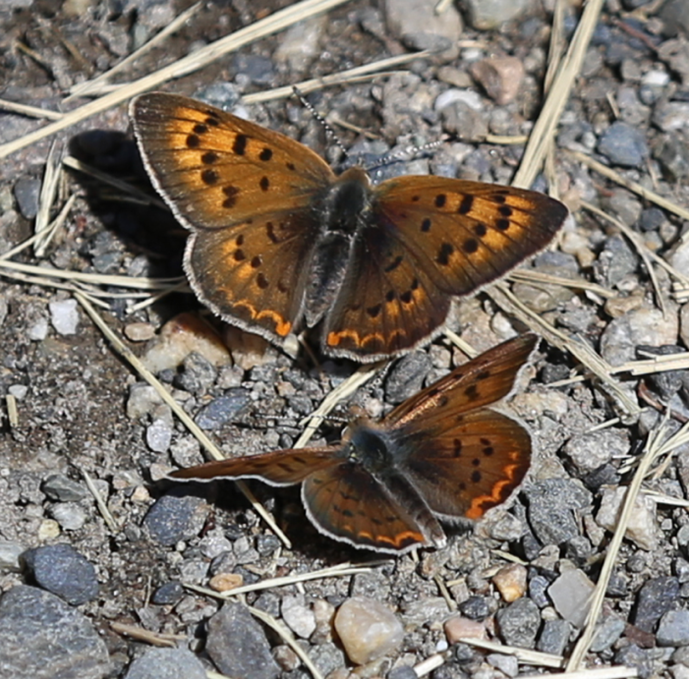
___ Dorcas Copper (Tharsalea dorcas)

___ Western Tailed-Blue (Cupido amyntula)

___ Northern Azure (Celastrina lucia)

___ Silvery Blue (Glaucopsyche lygdamus)

___ Northern Blue (Plebejus idas)

___ Greenish Blue (Icaricia saepiolus)

___ Cranberry Blue (Agriades optilete)

___ Arctic Blue (Agriades glandon)


 Typical Brushfoots

___ White Admiral (Limenitis arthemis)

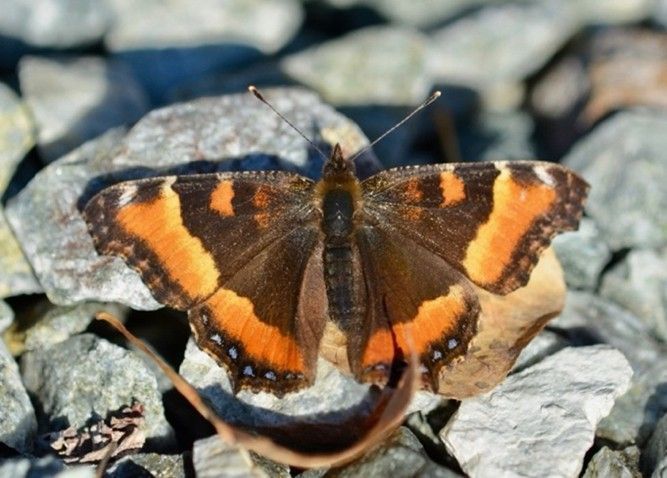
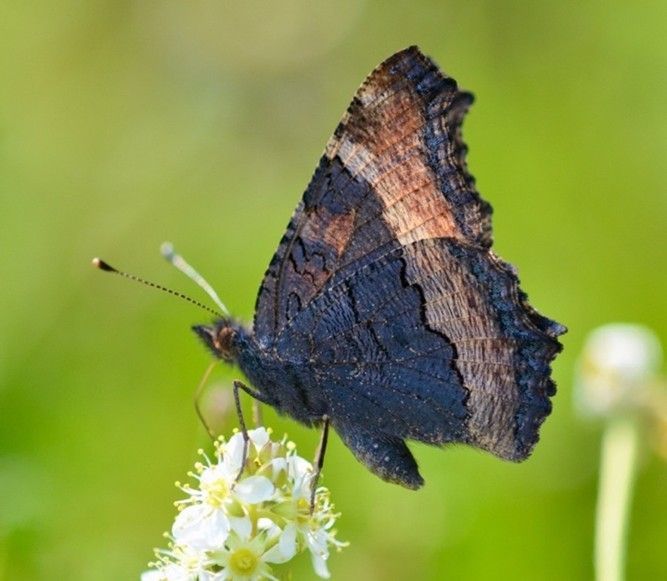
___ Milbert’s Tortoiseshell (Aglais milberti)

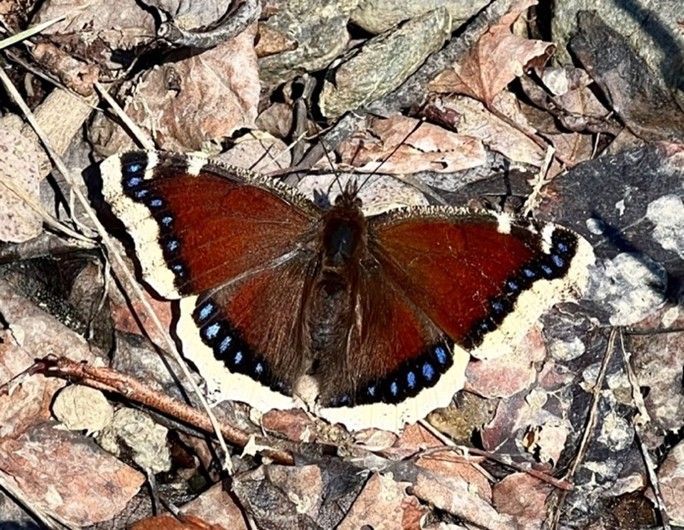
___ Mourning Cloak (Nymphalis antiopa)

___ Field Crescent (Phyciodes pulchella)

___ Hoary Comma (Polygonia gracilis)

___ Green Comma (Polygonia faunus)


Brushfoots - Fritillaries

___ Alaskan Fritillary (Boloria alaskensis)

___ Bog Fritillary (Boloria eunomia)

___ Silver-bordered Fritillary (Boloria myrina)

___ Frigga Fritillary (Boloria frigga)

___ Polaris Fritillary (Boloria polaris)

___ Freija Fritillary (Boloria freija)

___ Arctic Fritillary (Boloria chariclea)

___ Mormon Fritillary (Speyeria mormonia)


Brushfoots - Alpines and Arctics

___ Large Heath (Coenonympha tullia)

___ Disa Alpine (Erebia disa)

___ Taiga Alpine (Erebia mancinus)

___ Mt. McKinley Alpine (Erebia mackinleyensis)

___ Banded Alpine (Erebia fasciata)

___ Common Alpine (Erebia epipsodea)

___ Red-disked Alpine (Erebia discoidalis)

___ Yellow-dotted Alpine (Erebia pawloskii)

___ Reddish Alpine (Erebia lafontainei)

___ Polixenes Arctic (Oeneis polixenes)

___ Jutta Arctic (Oeneis jutta)

___ Melissa Arctic (Oeneis melissa)

___ White-veined Arctic (Oeneis bore)


*43 species have been observed locally. An additional 9 species (in RED) have been observed in southcentral Alaska and might be observed locally in the future.

When do butterfly species fly in Alaska? Here is a chart adapted from Butterflies of Alaska: A Field Guide that shows flight periods for all the butterflies in the state arranged from earliest to latest and color-coded by groups. The flight periods are based on statewide observations, so they may be slightly different in the Anchorage area.


Are you a birder?


So am I.  But as you grow older you find butterflying can often be more satisfying than birding. It doesn’t matter if your eyesight isn’t as sharp because butterflies allow a closer approach and don’t usually hide in the treetops. It doesn’t matter if your hearing is shot because butterflies don’t sing. If you’ve had your share of cold weather, butterflies feel your pain; they don’t like snow and ice either.  And if you are retired and like to sleep late, it doesn’t matter because butterflying is best when the sun is well above the horizon.  Butterflies are also much easier for kids to see and appreciate than wild birds. -Rick Sinnot


“Butterflies are very interesting. Here these things are little grubs for a while.  And then they go into a little coffin. There they are in a sarcophagus, and then they come out and dance with the angels.”
-Roger Tory Peterson